The Software Development Life Cycle (SDLC) in 2026: Phases, Models and Best Practices
What happens at each stage of building software, how Agile, Waterfall and DevOps differ, how security fits in, and what buyers should expect from a development partner.

Every successful software product, from a small internal tool to a large SaaS platform, goes through the same basic journey: understanding the problem, designing a solution, building it, testing it, releasing it and keeping it running. That journey is the software development life cycle (SDLC).
Knowing the SDLC helps buyers ask better questions, set realistic expectations and spot weak processes before they become expensive problems. This guide explains the phases, the main models and how security and AI fit in today.
Why process matters
Software is expensive to build and expensive to get wrong. The US Bureau of Labor Statistics reports a median annual wage of $133,080 for software developers in May 2024 (BLS), so every week of rework has a real cost.
Security failures cost even more. IBM's Cost of a Data Breach Report 2025 found the global average breach cost $4.44 million, and the US average $10.22 million (IBM). Many vulnerabilities are introduced during development and are far cheaper to prevent than to fix after release.
The seven phases of the SDLC
1. Planning
Define the business goal, scope, budget, timeline and risks. Decide what success looks like.
Output: a project brief with goals, constraints and success measures.
2. Requirements and discovery
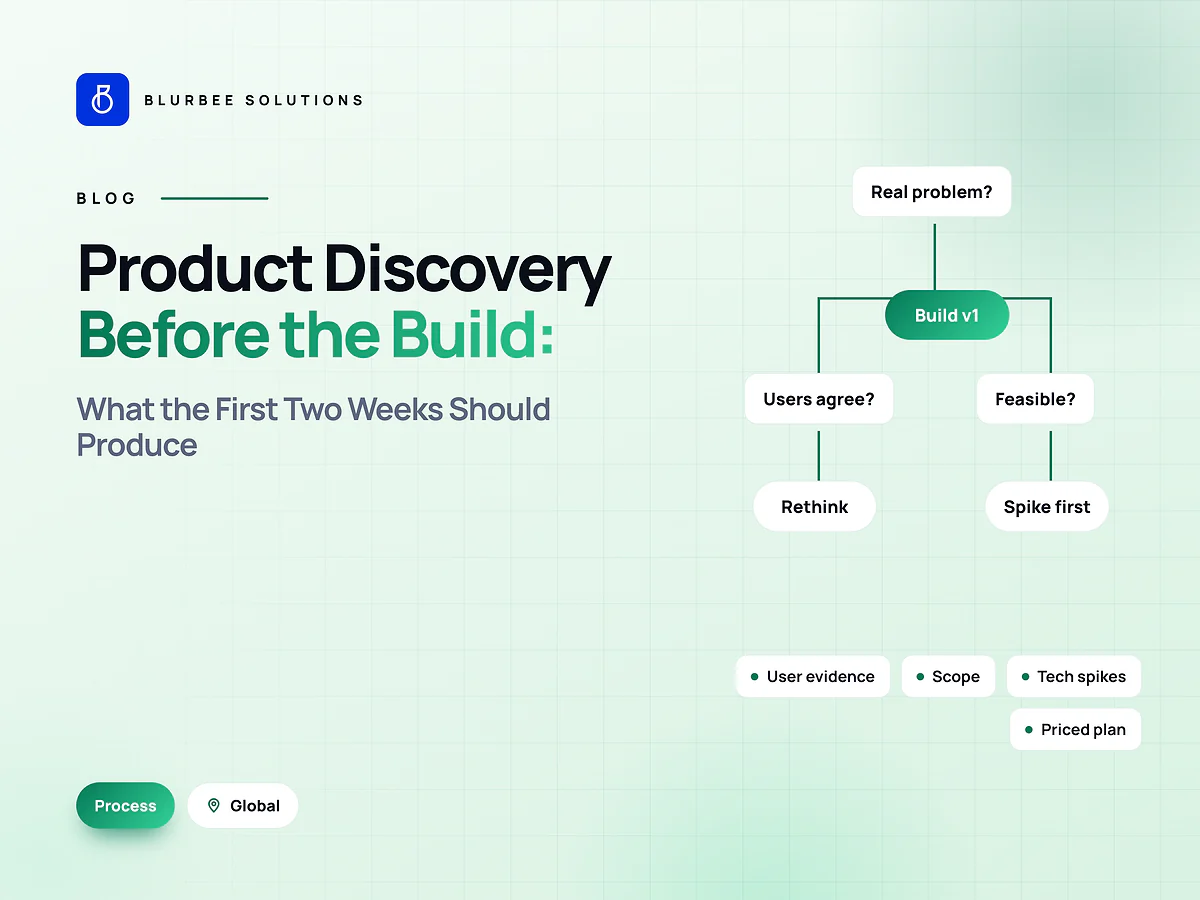
Understand users, workflows, data and integrations in detail. Turn ideas into user stories with acceptance criteria. Our article on the first two weeks of product discovery describes this phase.
Output: prioritized requirements and a scope for the first release.
3. Design
Design the user experience (flows, wireframes, prototypes) and the technical architecture (components, data model, integrations, infrastructure and security).
Output: prototypes, architecture decisions and a technical plan.
4. Development
Build the software in small increments, with code review, automated tests and continuous integration.
Output: working, tested features in a shared environment.
5. Testing
Verify that the software works as intended and is secure, fast and accessible: unit and integration tests, end-to-end tests, performance tests, security scans and user acceptance testing.
Output: a release candidate that meets acceptance criteria.
6. Deployment
Release to production using automated, repeatable pipelines, often gradually to limit risk, with the ability to roll back.
Output: live software, monitored from the first minute.
7. Maintenance and operations
Monitor, fix, patch, update dependencies and improve based on real usage. For most products this is the longest and most expensive phase. Our article on web app maintenance retainers covers budgeting for it.
Output: a stable, secure product that keeps improving.
SDLC models compared
| Model | How it works | Best for | Watch out for |
|---|---|---|---|
| Waterfall | Phases run in sequence, each completed before the next | Fixed, well-understood requirements; regulated documentation | Late feedback; costly changes |
| Agile (Scrum, Kanban) | Short iterations delivering working software, with regular feedback | Products with evolving requirements | Needs engaged decision-makers |
| DevOps | Development and operations combined, with automated build, test and release | Frequent, reliable releases | Requires investment in automation |
| Spiral / iterative | Repeated cycles with risk analysis | Large, high-risk systems | Can be heavy for small projects |
| V-model | Each development phase paired with a testing phase | Safety-critical and regulated systems | Less flexible |
Most modern teams combine Agile delivery with DevOps practices: short iterations, continuous integration, automated testing and frequent releases.
The secure SDLC
Security has to be part of every phase, not a test at the end. The US National Institute of Standards and Technology's Secure Software Development Framework (SSDF, NIST SP 800-218) sets out practices for preparing the organization, protecting the software, producing well-secured software and responding to vulnerabilities (NIST).
In practice, a secure SDLC includes:
- Threat modeling during design.
- Secure coding standards and peer code review.
- Dependency and secret scanning in the build pipeline.
- Static and dynamic security testing.
- Least-privilege access to code, environments and production.
- Separate environments, with no real customer data in development.
- Penetration testing before major releases.
- A vulnerability response process after launch.
Regulated industries add their own requirements; see our guides to HIPAA-compliant software and fintech app development.
How AI is changing the SDLC
AI coding assistants now help developers write code, tests and documentation faster, and AI tools help with code review, test generation and incident analysis. Used well, they speed up routine work. Used carelessly, they introduce subtle bugs, security issues and licensing questions.
Good teams treat AI-generated code like any other code: reviewed, tested and owned by a person. They also keep confidential code and data out of tools that don't meet their security requirements.
What buyers should expect from a development partner
At each phase, you should see concrete evidence of a mature process:
- Planning: clear goals, risks and a phased plan.
- Requirements: written user stories with acceptance criteria you can review.
- Design: prototypes you can click through and architecture decisions explained in plain language.
- Development: access to the repository, code review on every change, and working software every week or two.
- Testing: automated tests running on every change, and a clear test plan for releases.
- Deployment: automated pipelines, staging environments and a rollback plan.
- Maintenance: monitoring, patching, and a defined support process.
If a partner can't show you these, ask why.
Common SDLC mistakes
- Skipping discovery and building the wrong thing well.
- Treating testing as a phase at the end, instead of continuous work.
- Manual deployments that are slow and error-prone.
- No monitoring, so customers find problems first.
- Ignoring maintenance in the budget.
- Adding security late, when fixes cost the most.
Roles across the SDLC
Each phase needs different skills. On a typical project:
- Product owner or manager: owns goals, priorities and acceptance. Usually on the client side, supported by the partner.
- Business analyst: turns needs into clear requirements and acceptance criteria.
- UX/UI designer: researches users and designs flows, prototypes and interfaces.
- Solution architect: designs the technical approach, integrations and infrastructure.
- Developers: build features, write tests and review each other's code.
- QA engineers: plan and automate testing, and verify releases.
- DevOps engineer: builds pipelines, environments, monitoring and infrastructure as code.
- Delivery lead: coordinates the work, manages risks and keeps communication flowing.
On small projects one person may cover several roles. What matters is that every responsibility has an owner.
Metrics that show a healthy SDLC
Widely used delivery metrics include:
- Deployment frequency: how often working changes reach production.
- Lead time for changes: how long from code committed to code in production.
- Change failure rate: the share of releases that cause problems.
- Time to restore service: how quickly the team recovers from failures.
Add business measures such as feature adoption and customer satisfaction. Track trends rather than chasing single numbers.
Documentation that should exist at the end
- Architecture overview and key decisions.
- Setup instructions for development environments.
- API documentation.
- Deployment and rollback procedures.
- Runbooks for common operational issues.
- Test strategy and how to run the tests.
- Security controls and access lists.
This documentation is what lets another team, or your own, maintain the software without depending on the original builders.
Key takeaways
The SDLC turns an idea into reliable software through planning, requirements, design, development, testing, deployment and maintenance. Most teams combine Agile delivery with DevOps automation, and security belongs in every phase. Expect your partner to show evidence of each phase: written requirements, prototypes, code review, automated tests, automated releases and monitoring.
Choosing the right model for your project
- A fixed, regulated scope with heavy documentation, such as a compliance system with defined requirements: Waterfall or the V-model, or Agile with formal documentation at each milestone.
- A new product with uncertain requirements: Agile with short iterations and frequent user feedback.
- A live product with frequent changes: Agile plus DevOps, with continuous integration, automated testing and frequent, small releases.
- A large, high-risk system: an iterative or spiral approach, with risk reviews at each cycle and early prototypes of the riskiest parts.
Whatever the model, insist on working software early, written acceptance criteria, automated tests and a clear release process. The label matters far less than these practices.
How long does each phase take?
For a typical first release of a business application:
- Planning and discovery: around two to four weeks, depending on complexity and how quickly decisions are made.
- Design: often overlaps with discovery and early development; key flows are prototyped first.
- Development and testing: usually most of the timeline, delivered in one- or two-week iterations with testing throughout.
- Deployment: quick when pipelines are automated; slower when releases are manual or need formal approvals.
- Maintenance: ongoing for the life of the product.
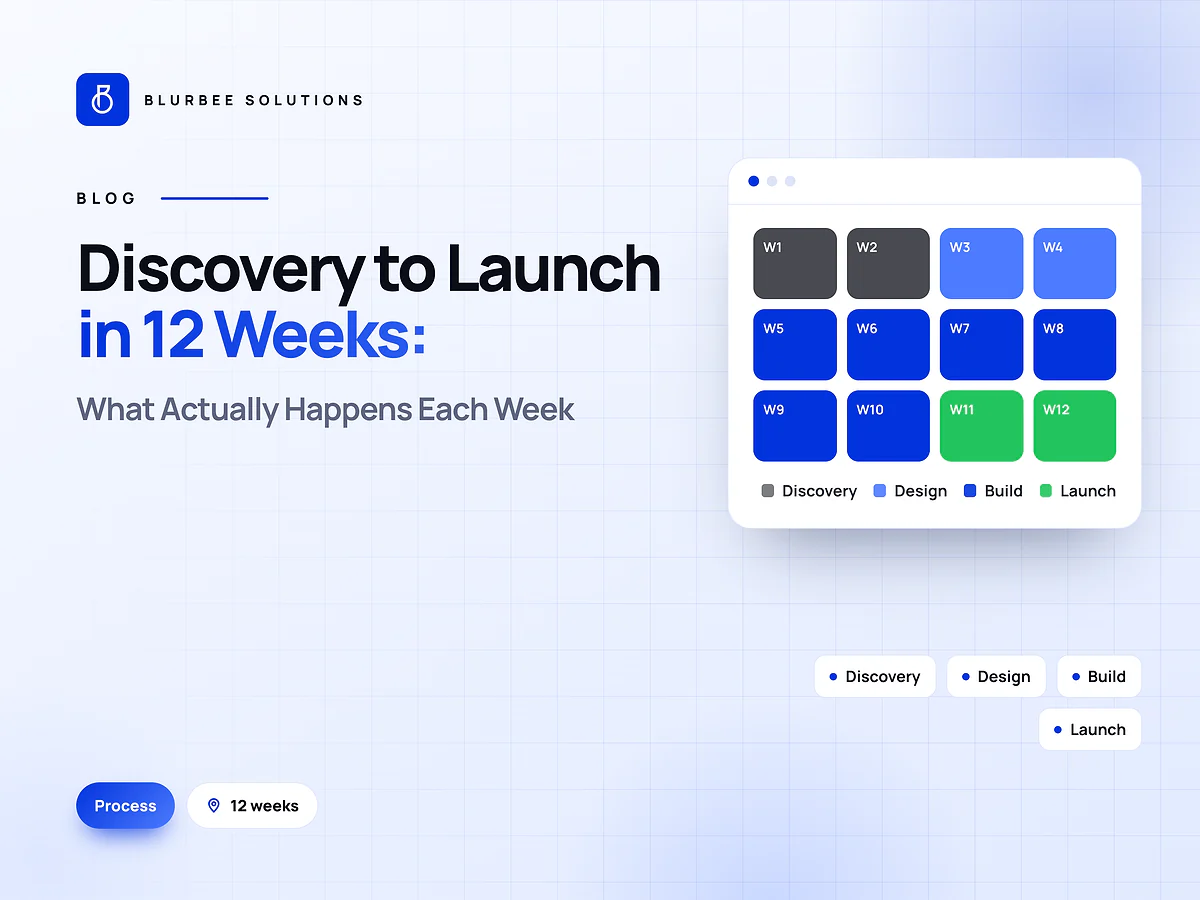
Blurbee's typical web development engagement runs six to fourteen weeks, and our fixed-scope first projects run two to four weeks. Larger systems are delivered in phases, each passing through the full cycle.
The SDLC at Blurbee
Blurbee runs projects in short iterations with discovery first, prototypes before code, code review and automated tests on every change, automated deployment and monitoring from launch. We start with a fixed-scope first project of two to four weeks, sign an NDA first, and assign code and IP to you in writing. See our web development services, web development across the USA and our discovery to launch in 12 weeks article.