How to Hire Dedicated Developers from India in 2026: Models, Rates and a Hiring Checklist
A practical guide for companies in the USA, UK, UAE and Canada: which engagement model fits, what it costs against local hiring, how overlap works and what to put in the contract.


Hiring dedicated developers from India is no longer a cost-only decision. Teams in the United States, United Kingdom, United Arab Emirates and Canada use Indian engineers because they can add senior people quickly, keep the work inside their own tools, and scale up or down without a local recruitment cycle. Done well, a dedicated developer behaves like an employee who happens to sit in another office. Done badly, it becomes a ticket queue with a time difference.
This guide covers what actually decides the outcome: the engagement model, the real cost against local hiring, how the time difference works day to day, and what the contract has to say.
What "dedicated developer" means
A dedicated developer works only on your product, full time, for an agreed period. They join your standups, your repository, your issue tracker and your chat, and they take direction from your product owner or tech lead. The vendor handles employment, payroll, equipment, replacement if someone leaves, and usually a delivery lead who keeps an eye on quality.
That is different from two other common models:
- Fixed-scope project: the vendor commits to a defined outcome for a defined price. Good for a first engagement or a well-specified feature, less good for an evolving roadmap.
- Time and materials team: a vendor-led team works through your backlog, billed by the hour. Flexible, but you manage less of the day-to-day.
Most companies start with a small fixed-scope project of two to four weeks to see how a partner works, then move to dedicated developers once trust is established. We recommend exactly that sequence, because it gives you evidence before a longer commitment.
Which roles companies hire most
Demand follows the modern product stack. The roles we are asked for most often are:
- Front end: React, Next.js and Angular developers for web applications and dashboards.
- Back end: Node.js, Python, Django, FastAPI and Laravel developers for APIs and business logic.
- Mobile: Flutter and React Native developers for cross-platform apps.
- AI and data: AI and ML engineers and data engineers for LLM features, automation and pipelines.
- Cloud: AWS, Google Cloud and Docker or CI/CD specialists for infrastructure and release automation.
You can see every role, and how it is offered in your country, on our hire developers by country pages.
What it costs compared with hiring locally
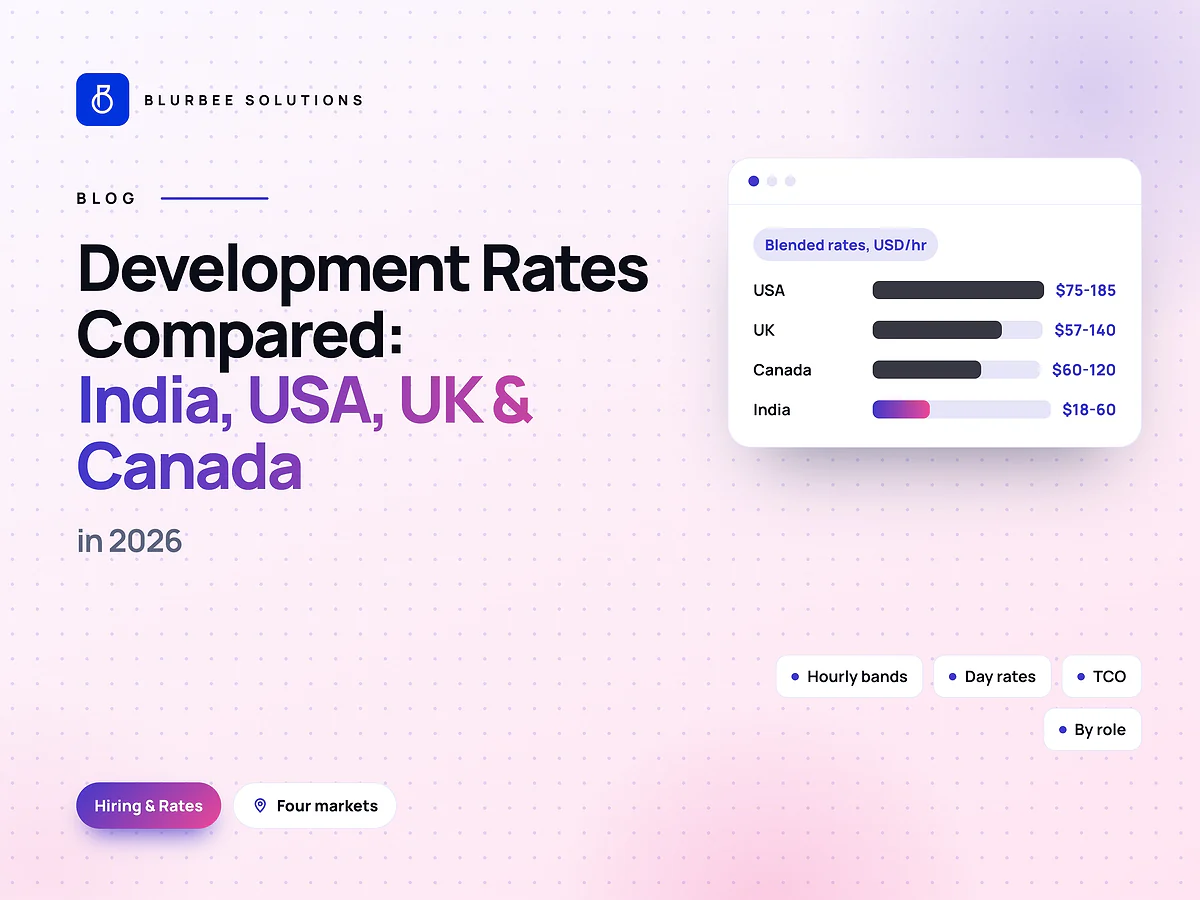
Local agency rates vary by city, but the ranges below are the ones published across our location pages for comparable seniority:
| Market | Typical local agency rate (per hour) |
|---|---|
| United States | $75–$220 |
| United Kingdom | £45–£130 |
| United Arab Emirates | AED 120–420 |
| Canada | CA$60–175 |
| India | ₹800–3,600 |
For comparison, our own blended rates for dedicated developers sit between roughly $22 and $60 per hour depending on role and seniority, with web developers at the lower end and AI and ML engineers at the upper end. The saving is real, but it is not the whole story: the number that matters is total cost of ownership, which includes how much rework the first six months create, how quickly a new developer becomes productive, and whether the code can be maintained by someone else later.
How the time difference works in practice
India Standard Time is a single time zone, so the overlap with your team is predictable:
- United Kingdom: around five hours of shared working day, enough for standups, reviews and pair sessions.
- United Arab Emirates: India is 1.5 hours ahead, so almost the whole working day overlaps.
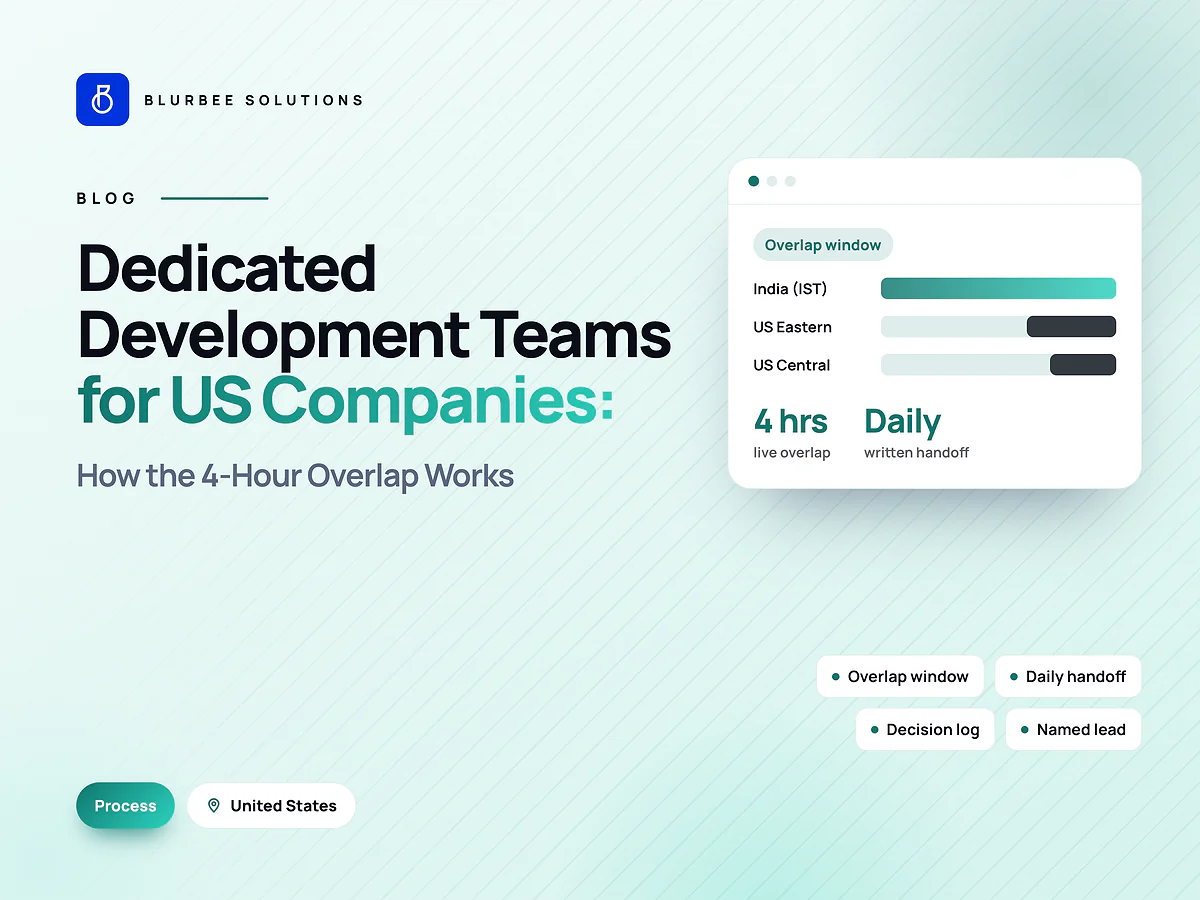
- United States: one to three and a half hours depending on the coast, usually your morning and our evening.
- Canada: one to four hours depending on the province.
The overlap window is used for the conversations that need people in the same room: standups, design reviews, sprint planning and demos. Everything else runs asynchronously with a written end-of-day handoff and a decision log, so your team wakes up to progress rather than questions. Teams that write things down get more from offshore developers than teams that rely on calls.
The hiring process, step by step
- Share your requirements. Role, seniority, stack, the product the developer will work on, and how your team runs.
- Agree the engagement model and scope. Dedicated, fixed scope or a mix, plus notice periods and replacement terms.
- Select your developers. Review profiles, run your own technical interview, and ask for a short paid trial task if it helps.
- Onboard and start. Repository access, environments, a first small ticket in week one, and a review at the end of the first month.
The first month decides most engagements. Give the developer a real but contained piece of work, review their pull requests closely, and agree what "done" means before the first sprint ends.
What the contract must cover
Whatever vendor you choose, the contract should state clearly:
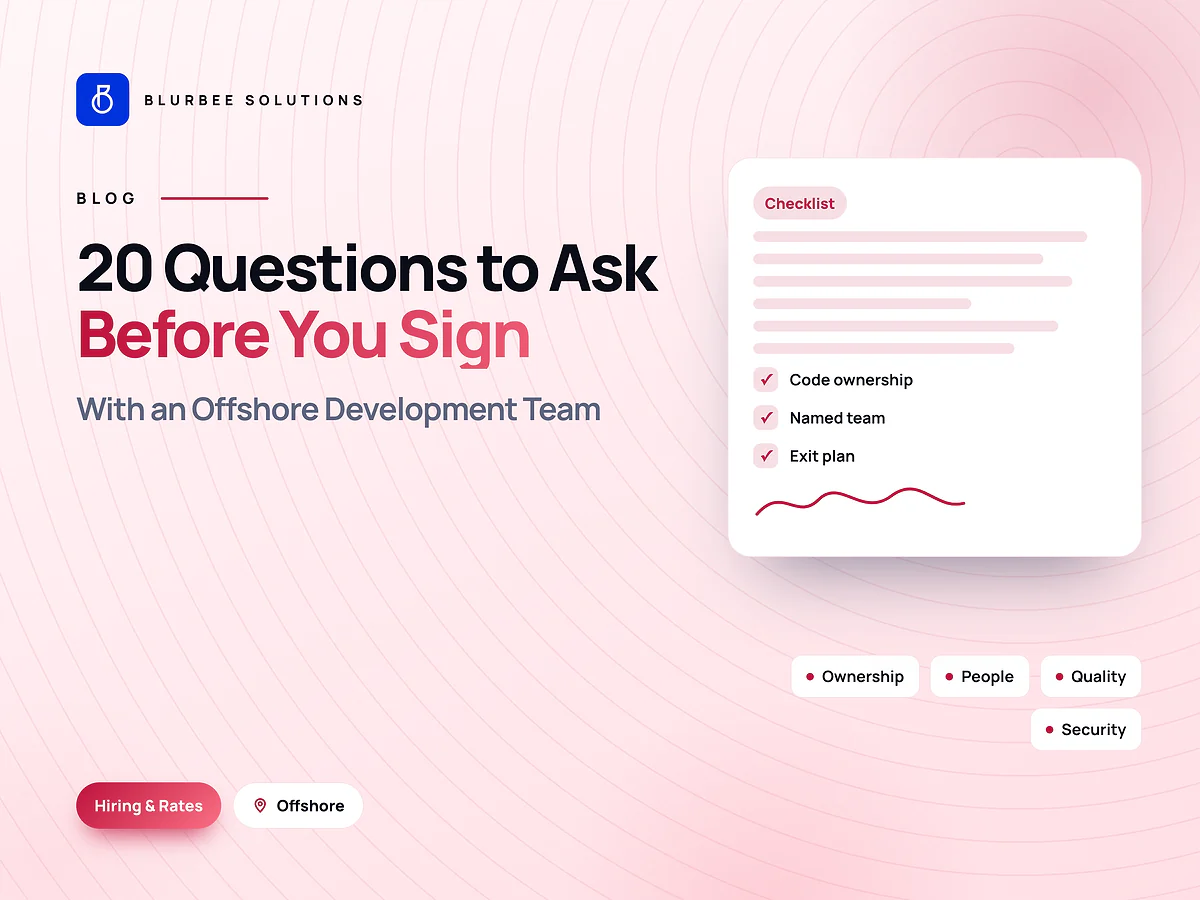
- Intellectual property: code, designs and documentation are assigned to you in writing on payment.
- Confidentiality: an NDA is signed before you share the brief.
- Data protection: the data-processing terms that match your market, for example UK GDPR, PIPEDA in Canada, the UAE PDPL or state privacy laws in the US.
- Access: repositories, cloud accounts and third-party services are created in your name, not the vendor's.
- Replacement and exit: how quickly a developer is replaced, and what is handed over if the engagement ends.
If a vendor will not put these in writing, that tells you what you need to know.
Red flags when choosing a partner
- Profiles that look identical and interviews you are not allowed to run yourself.
- No named delivery lead, only an account manager who relays questions.
- Reluctance to start small or to work in your own repositories.
- Estimates that are suspiciously precise before anyone has seen the codebase.
- Code, accounts or domains held in the vendor's name.
How to measure whether it is working
Agree measures before the first sprint, so the conversation after a month is about evidence rather than impressions:
- Delivery: stories completed per sprint against what was planned, and how often work is reopened after review.
- Quality: defects found after release, test coverage on new code and review comments per pull request.
- Communication: whether handoffs arrive on time and decisions are written down.
- Ramp-up: how quickly the developer moves from small tickets to owning a feature.
Review these together at the end of the first month and again at the end of the third. If a developer is not working out, raise it early: a good partner replaces quickly and shares the reasons.
Common mistakes companies make
- Treating the developer as an outsider. If they are left out of planning and design discussions, they will build exactly what the ticket says and nothing more.
- Skipping documentation. Offshore teams depend on written context. A short architecture note, a glossary and a setup guide save weeks.
- Starting too big. Hiring five developers at once before the way of working is proven multiplies every early problem.
- Choosing on rate alone. The cheapest hourly rate often produces the most expensive codebase.
- No single owner on your side. Someone in your company must prioritise the backlog and answer questions every day.
Getting started
If you are hiring your first dedicated developer from India, start with one role and one contained piece of work, measure the result, and grow from there. Blurbee Solutions has delivered for clients in the USA, UK, UAE, Canada and India since 2019 with a team of 35+ engineers and designers in Surat. Tell us what you need and a delivery lead will reply within 24 hours on working days.